Why You Should Cellar The Right Wine

By Jonathan Cristaldi

What kind of wine drinker are you? Are you the type to buy and drink through your stash, only to replenish and continue the cycle of purely hedonistic drinking? Or do you sock away a few bottles to save and savor later in the eternal cat-and-mouse game of catching a wine in the prime of its life—when it balances beautiful fruit complexity with secondary, even tertiary nuances? If you’re wondering what I’m talking about, keep reading.

Rather than explain why you should consider buying enough wine to enjoy some bottles “now” and others “later” I want to share some of my favorite recent reads from the pages of Vinous — articles about tasting wines that were bottled a decade, two decades, and some up to seven decades ago!

But first, a bit of context on Vinous: The company was founded by Antonio Galloni, who rose to fame as the heir-apparent and supposed replacement critic for Robert Parker, who was getting ready to retire a decade ago. Famously, in 2013, Galloni broke with Parker’s Wine Advocate to start his own publication, which he named Vinous. The articles that Galloni and his talented team of knowledgeable critics publish are rarely anything other than stylish, fun, and thoroughly detailed reads—and their in-depth knowledge and vast tasting experiences make them some of the most reliable judges in the world when it comes to judging the quality of wine (and it’s ageability).   

In recent months, Vinous has posted a handful of articles that would make any collector envious of their tasting endeavors; but putting aside personal jealousies, there is much to be gleaned from reading about the older wines these seasoned critics are tasting.
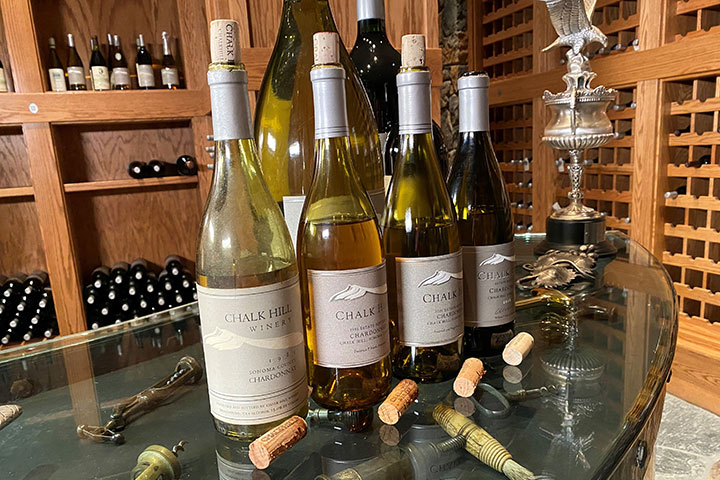
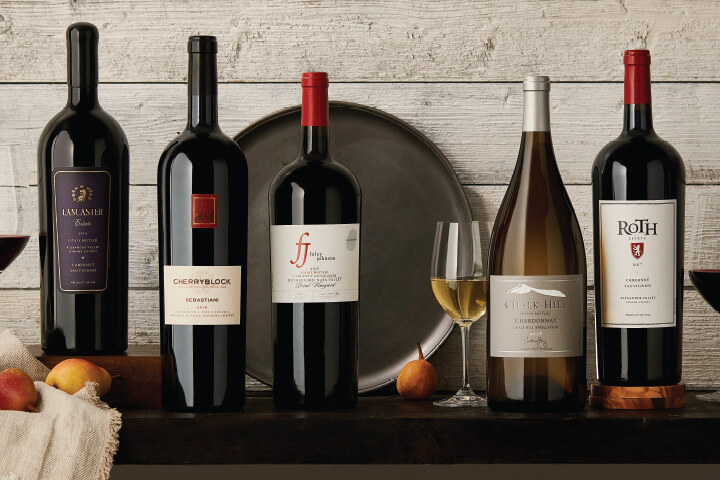
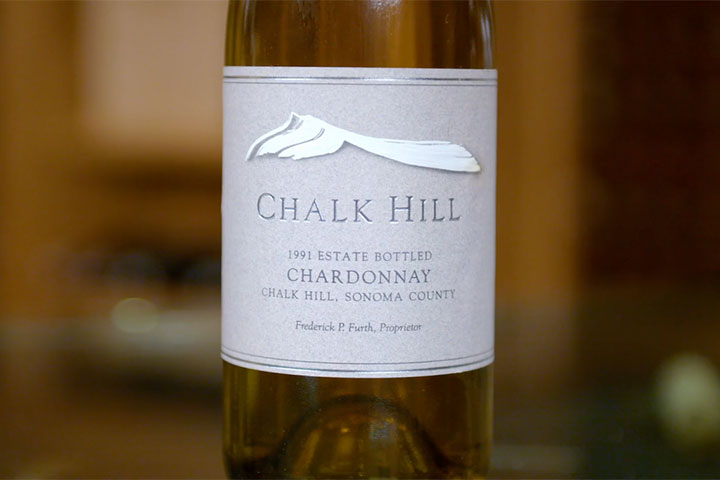
chalk hill cellar wines

First up, is a review by Eric Guido of a 1999 Dunn Vineyards Cabernet Sauvignon from Napa Valley. Guido, who tasted this wine in November of 2020, when the Dunn Cab had just turned drinking-age in America (21!) noted that it was simply, “gorgeous, with a display of sweet tobacco, green stems and sage which give way to musky red and black currants. It gains in depth and complexity with time in the glass, taking on hints of dried flowers, clove and graphite,” and the superlatives keep coming: “velvety,” “lifted,” “elegant and long,” before Guido concludes, “It’s amazing how youthful and fresh this is with twenty-one years under its belt,” before suggesting it could be enjoyed well into 2030.

Have you ever imagined buying enough bottles of one wine that you could pop corks every five years for three decades to track its progression? If those notes about the Dunn aren’t good enough reason alone to cellar some of your favorite Foley Family Cabernet Sauvignon wines (or any of the powerful, robust red blends you love), consider this review by Galloni himself of a 1997 Marcassin Pinot Noir from the Sonoma Coast.

Galloni minced no words, declaring the aged Pinot, “without a doubt one of the most compelling wines I tasted,” last year. “At 23 years of age,” he continues, “it has aged exquisitely. Sweet, perfumed and riveting in its beauty, the 1997 is utterly captivating from the moment it is first opened. A whole range of sweet red/purplish berry fruit, spice and floral notes emerges effortlessly. The purity of the flavors is just mesmerizing.”

Just mesmerizing! I bet!

Is the “Why” in “Why You Should Cellar The Right Wine” becoming a bit more clear? If you still need more convincing, consider what Neal Martin had to say about a jaw-dropping tasting experience with Château Lagrange, a French Bordeaux Third-Growth Classified estate. Martin was treated to a stunning lineup of wines going from the current-release 2015 vintage, all the way back to the 1959 bottling!

Imagine tasting 56 vintages of one wine! I’ve plucked out a few of Martin’s notes from four vintages:

Writing about the 2010 Lagrange, Martin found aromas of, “beautifully defined brambly red fruit, crushed stone, violet and iris,” “almost pixelated in detail. The palate is medium-bodied with very fine tannins, precise and focused with a silky mouthfeel.” Skipping a decade, his notes on the 2000 Lagrange revealed, “Much deeper in colour than previous vintages thanks to the higher percentage of Cabernet Sauvignon, it has an attractive bouquet with blackberry, cedar and sandalwood aromas, touches of ash developing with time.” Going back yet another 10 years, tasting the 1990 Lagrange (a 30-year-old wine!), Martin finds, “The bouquet is well defined with pressed flowers, orange pith, brambly red fruit and warm gravel, warm and inviting aromatics,” “with Indian spices lining the harmonious finish.” Okay, okay, now we’re talking! So, what about the 1959 Lagrange, a 56-year old wine?!

Martin’s review: “Limpid in colour with moderate bricking, it has an engaging and refined bouquet of red berries, terracotta, touches of tomato leaf and mint. The palate conveys the precocity of that growing season with a sweet but degraded core of red fruit, abraded tannins and a slightly smudged finish with hints of truffle and bay leaf. There remains plenty of vigor with quite a long aftertaste. It’s a lovely 1959, not the best, but certainly one that deserves a pat on the back.”

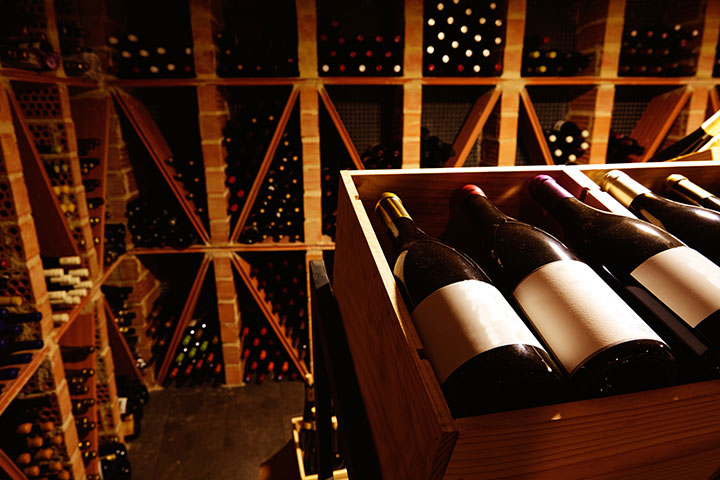
That’s a pretty cool tasting note, and a great argument for cellaring wine—you needn’t cellar bottles for over 50 years, of course. I don’t think anyone beyond serious collectors looking to invest in wine as a monetary asset are interested in cellaring wine for five decades or more, but holding onto wine for even a few years is worth it for the tasting rewards you’ll reap.
wine cellar

But what is the “right” wine to cellar? In truth, it’s hard to say, because it all depends on how the wine was made, but generally speaking the top bottlings of most wineries are meant for both early enjoyment and aging. For whites, these are often Chardonnays or barrel-aged Sauvignon Blancs, but certain white Rhône varieties, Spanish whites, Italian whites, and German and Austrian Rieslings are capable of long aging. With reds, it’s not just the bold Bordeaux varietal-based wines like Cabernet Sauvignon and Merlot-heavy blends, but also Syrah, Malbec, and a host of wines from all over the world. Think: big bold flavors balanced by structured tannins and good acidity. In short, many wines are the “right” wines for potential aging.

Once you start collecting for aging, it becomes easier with each passing year. Imagine if you’d cellared even a few bottles of the 2012 vintage in Napa, at the start of the drought years when they were released in 2014-15? Today, they’d be eight years old, and the best are beginning to develop some of those secondary (bramble, warm gravel, brown- and Indian-spices) complexity, and are still far off from developing sumptusou tertiary notes like truffle, bay leaf, tomato leaf.

So, what are you waiting for? My best suggestion for Foley Food & Wine Society members is to phone up your favorite Foley connection and ask which wines you’ve purchased are worth holding longer and which wines you should be buying regularly to enjoy some now, and to lay some down for the long haul. You’ll be thanking me in 5, 10, 15, 20 years from now. — JC


About the Author
Jonathan Cristaldi is the editor-at-large for The SOMM Journal and The Tasting Panel Magazine and is a regular contributor to Food & Wine, Liquor.com, and Seven Fifty Daily. His writing has appeared in Departures, Los Angeles Magazine, First We Feast, Thrillist, Time Out LA, Tasting Table, and Psychology Today. Cristaldi was named a “Wine Prophet” by Time Out NY for his witty and often avant-garde approach to wine education. “The L-Train Luncheon,” a video on YouTube, features one of his best experiential event concepts, which came to life on a New York City subway car.
12 Best Wines of 2020

We are honored and humbled by all the praise and attention that our portfolio of wines has received over the past year. Despite all the madness of 2020, both critics and consumers alike have shown a sincere appreciation for our wines, and for that we are grateful.
Many of our Foley Family Wines earned 90+ scores, landed several Top 100 honors, and enjoyed a host of awards and praise from professional wine publications and competitions.

To celebrate, we’ve put together this “must-have” list of our 12 top wines of 2020 from across our Foley Family Wines portfolio. And lastly, here’s a big shout of “Thanks!” to all of you—our Foley Food & Wine Society fans—for all your continued support.

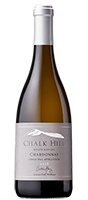
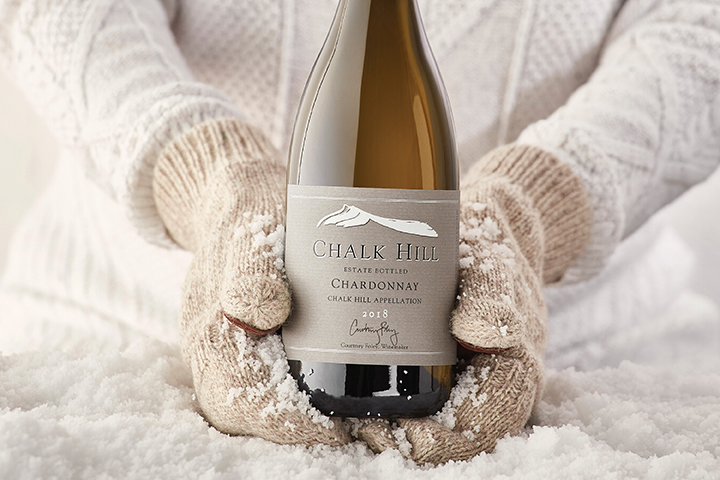
2017 CHALK HILL ESTATE CHARDONNAY, CHALK HILL AVA (MAGNUM)

Sonoma Magazine Top 100 Wines of 2020 & 91 Points, Robert Parker’s Wine Advocate
For lovers of rich, unctuous Chardonnays, this is your bottle. The wine has inviting aromas of honey and lemon curd, then a gush of ripe golden apple, pineapple, and Meyer lemon flavors on the palate, with baking spice and a buttery accent. For all its richness, it finishes with snappy acidity. — Linda Murphy, Sonoma Magazine

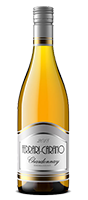
2018 CHALK HILL CHARDONNAY, SONOMA COAST

92 Points, Tasting Panel & Hot Prospect Award for the 4th Consecutive Year
Barrel-aged 10 months sur lie and with 100% malolactic fermentation result in a pillow-like, creamy, voluptuous wine. Lemon curd, mandarin and toasty char awaken the palate. Notes of buttered hazelnut may be unctuous but this elegant white is certainly not flabby: it supports a fine acidity and underlying minerality with aromas of creme brulee and banana. — Meredith May, Tasting Panel

2018 CHALK HILL ESTATE CHARDONNAY, CHALK HILL AVA

92 Points, Robert Parker’s Wine Advocate
The 2018 Chardonnay Estate has lush scents of baked apples, honeysuckle, honeycomb and hay with notes of quince paste and almonds. The palate is medium-bodied, rounded and slightly buttery with a long, uplifted finish.

2016 CHALK HILL ESTATE RED BLEND CHALK HILL AVA

Sonoma Magazine Top 100 Wines of 2020
Cabernet Sauvignon and Malbec dominate this blend, with Petit Verdot and Merlot accenting the rich, jammy palate. It’s intense in its blackberry pie, black cherry, dark chocolate, and cigar box characteristics, and at 15.2% alcohol, it’s potently attractive to fans of this style. The fresh finish balances the richness. — Linda Murphy, Sonoma Magazine

ferrari carano wines

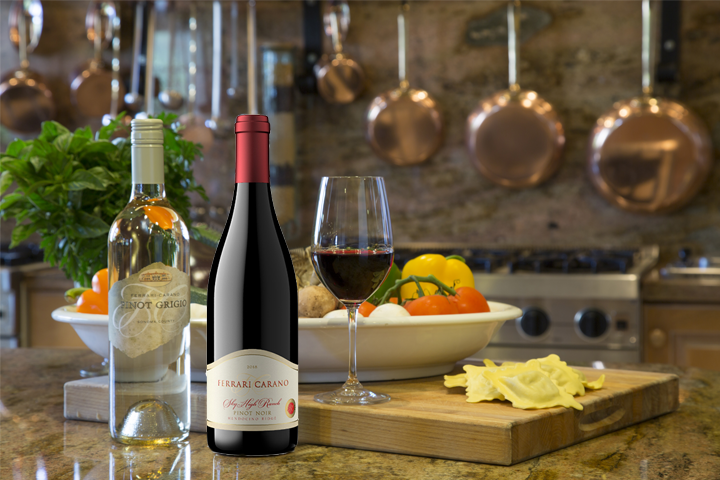
2019 FERRARI-CARANO VINEYARDS AND WINERY SONOMA COUNTY PINOT GRIGIO

Sonoma Magazine Top 100 Wines of 2020
VALUE Simply put… Forget the thin, neutral-tasting Italian Pinot Grigios that sell at this price point, and embrace the ambrosial peach, apricot, and pineapple fruit in this rewarding wine, which has the acidity to balance the lush flavors. Aperitif time. — Linda Murphy, Sonoma Magazine

2018 FERRARI-CARANO SKY HIGH RANCH PINOT NOIR MENDOCINO RIDGE

95 Points, Wine Enthusiast & #48 on Top 100 Cellar Selections of 2020
This wine wraps beautiful, concentrated fruit and dark-spice flavors in a velvety texture. Focused flavors of black cherry and wild raspberry are accented with clove and cassis on the expansive palate and lingering finish. Best through 2025. — Jim Gordon

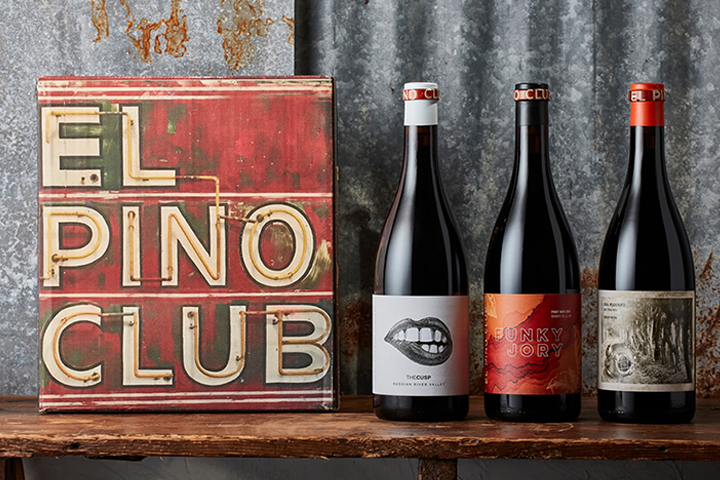
EL PINO CLUB:

el pino club

Inaugural vintage releases of our three Pinot Noirs receive top scores!

2018 THE CUSP PINOT NOIR RUSSIAN RIVER VALLEY (EL PINO CLUB)

90 Points, Wine Spectator
Fresh cherry and dried raspberry flavors show a lot of cedar spice accents in this red, with a firm, minerally finish that has plenty of toasty notes. Drink now through 2023. 1,000 cases made. — Kim Marcus

2018 SEA FLOORED PINOT NOIR STA. RITA HILLS (EL PINO CLUB)

94 Points, Tasting Panel & 93 Points, Wine Enthusiast “Cellar Selection”
Bright aromas of red rose petals, damp leaves, and cranberry cola…a silky mouthfeel, with earth, slate, pomegranate, red tea, and cinnamon. — Meredith May, Tasting Panel

Coiled aromas of raspberry and red cherry meet with a hint of loamy soil…then come flavors of black raspberry paste and cardamom. — Matt Kettmann, Wine Enthusiast

2018 FUNKY JORY PINOT NOIR DUNDEE HILLS (EL PINO CLUB)

93 Points, Tasting Panel
Black cherry tannins create a dry, dusty entry. Asian spice, dried heather, and red tea come in mid-palate. Damp earth and ripe strawberry lend character into a juicy finish. — Meredith May, Tasting Panel

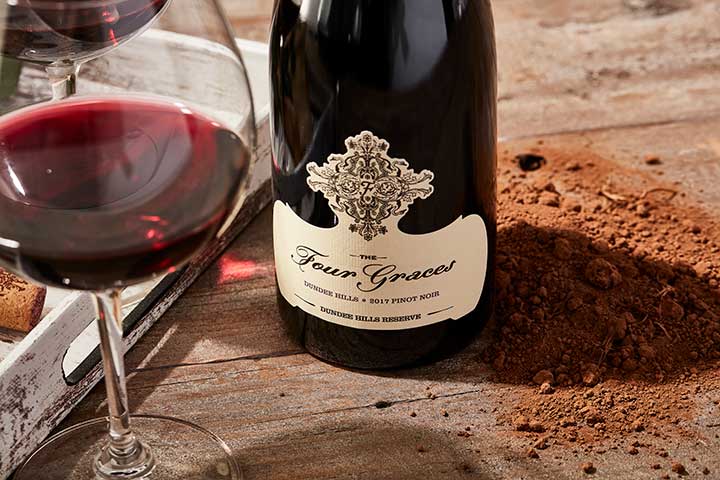
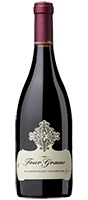
2017 THE FOUR GRACES DUNDEE HILLS RESERVE PINOT NOIR

94 Points, Wine Spectator & #29 on Spectator’s Top 100 Wines of 2020
A delicate and polished beauty, with expressive violet and raspberry aromas that open to gracefully layered cherry and spiced cinnamon accents that build richness toward refined tannins. Drink now through 2029.

SOLD OUT

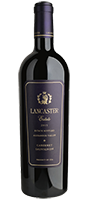
2017 LANCASTER ESTATE CABERNET SAUVIGNON

91 Points, Robert Parker’s Wine Advocate
The 2017 Cabernet Sauvignon Estate is blended with 7% Malbec, 4% Merlot, 4% Cabernet Franc and 1% Petite Verdot. It has a nose of blackcurrants and cherries with accents of loamy earth, cedar, dried herbs and sweet spice. The palate is full-bodied with lush fruits and a minerally undercurrent, grainy and with just enough freshness on the finish.

SOLD OUT

2016 MERUS CABERNET SAUVIGNON, COOMBSVILLE

93 Points, Wine Spectator
This offers a fun blast of blueberry and açaí berry fruit, backed by violet and cocoa notes, ending with a graphite edge that should soften with brief cellaring. Reveals a lingering violet accent. Best from 2021 through 2030.

SOLD OUT

Update on Northern California Tasting Room Closures

Friends of The Foley Food & Wine Society,

We are writing to inform you of changes to our operating hours, which are required to help mitigate the spread of COVID-19 and comply with the State of California’s recent mandatory stay at home order. Effective immediately, our Banshee WinesFoley SonomaFoley JohnsonLancaster EstateRoth Estate Winery and Sebastiani Vineyards and Winery tasting rooms will be temporarily closed for public and on-site tasting experiences.
It saddens us to make this difficult decision, but it is necessary to ensure the health of our staff, our customers, and our community. We look forward to reopening as soon as possible.
 
While we can’t host you at the winery during this time, we can help spread holiday cheer to you and your loved ones with a few options below.

*Curbside Pickup – Place your wine order by calling or emailing the tasting room and schedule a curbside pickup. We have ensured a contact-free pick up system for your safety.

* Order Online – Visit us online at www.foleyfoodandwinesociety.com to have an assortment of your favorite wines shipped directly to your home. Just log in and let the virtual shopping fun begin!

* Concierge Service – We are committed to personally helping you order wines for your table or to send to others as a gift. We have our concierge team on standby to assist you with any custom ordering for all of your holiday needs. Call (855)-883-8688 or email us today!


* Stay Connected – See our latest updates on InstagramFacebook and Twitter. Don’t forget to tag us in all your special moments this Holiday Season when you open a Foley Family wine, so we can spread the cheer some more.

We are truly thankful for your continued support and hope to see you soon. Stay safe and happy holidays!

Cheers,

The Foley Family Food & Wine Society Team

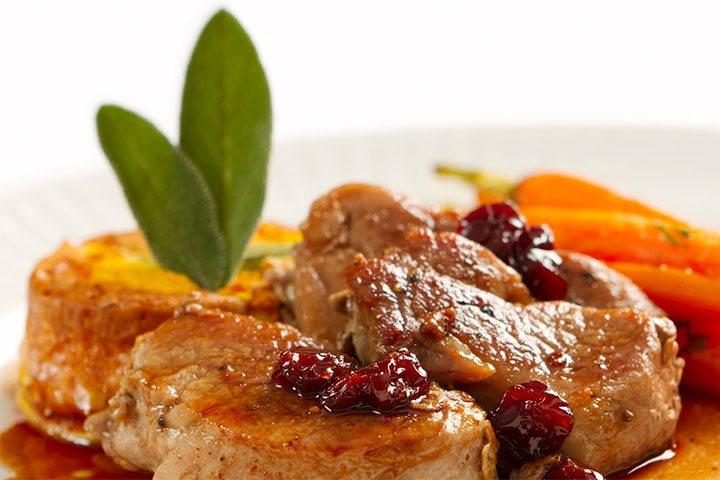
Seasonal Stuffed Pork Tenderloin Medallions

Directions:
Preheat oven to 400°F.In a mixing bowl, add the wild mushrooms, parsley, breadcrumbs, Parmesan, Vella Toma cheese and egg mix well. Clean pork tenderloin, butterfly and pound it thin. Add the stuffing to the center and roll like a cigar. Rub with the meat with the salt, pepper and sage. Wrap tenderloin with pancetta. In a large sauté pan on high heat, add the oil and butter, brown the tenderloin wrapped with pancetta on all sides and place in a 400 degree oven for 10-15 minutes or until center cooked to 150 degrees. Remove the pan from oven, remove the tenderloin from the pan and deglaze with pomegranate juice, reduce by half, then add the demi-glace, salt and pepper to taste. Slice the tenderloin on a bias and serve over the pomegranate sauce with your favorite side dish. I recommend a risotto torte or mashed potatoes. 

Wine Pairing:

2016 Chalk Hill Syrah, Sonoma County

On the nose, our 2016 Syrah offers alluring aromas of black cherry and blueberry, with hints of sweet vanilla oak, dark chocolate and allspice. The palate is rich and luscious with flavors of blackberry jam, black olive, tobacco and dried herbs.

Ingredients:

  • 1/2 cup wild mushrooms, chopped and sautéed with white wine
  • 3 tablespoons minced fresh parsley
  • 1/4 cup of breadcrumbs
  • 1/4 cup of grated Parmesan cheese
  • 1/4 cup of Vella Toma cheese, shredded
  • 1 egg
  • 1 pork tenderloin (1.5 pounds), cleaned
  • salt and pepper
  • 3 tablespoons chopped sage
  • 12 slices of thin sliced (1/8 inch) pancetta
  • 3 tablespoon of olive oil
  • 3 tablespoon of butter
  • 1 cup of pomegranate juice
  • 1/4 cup of demi-glace

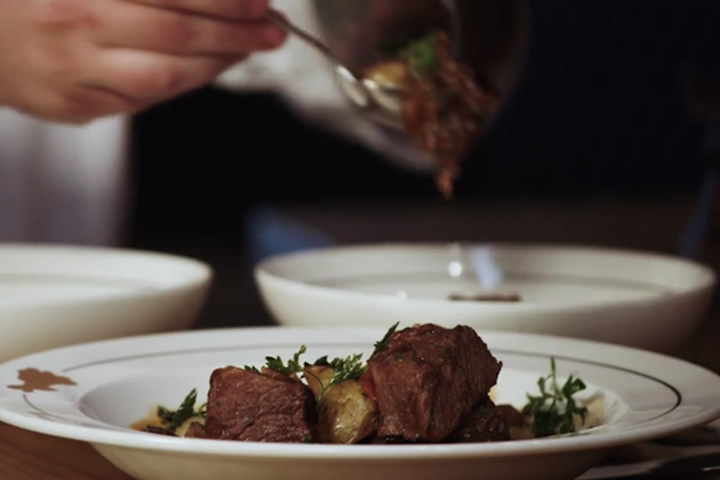
Hearty Holiday Beef Bourguignon

Directions:
In large pot render bacon until crispy. Remove bacon for later, keeping rendered fat in pot. Add beef and cook until golden brown on all sides. Remove beef from pot and add carrots, celery, onion, thyme and bay. Cook for 3 minutes then add wine and tomato paste. Cook until reduced by half and then add veal stock. Add beef and bacon back to pot and cover and place in 300 degree oven and cook for 3 hours, until very tender. 

While beef is in oven cooking prepare vegetables. Toss all vegetables together with 1/2 cup olive oil and 1 T salt. Spread out on large baking sheet in even layer and cook in 300 oven for 25 minutes. Reserve. When beef is done cooking add to pot.  

To Serve:
Portion beef bourguignon into warmed serving plates, top with fried parsley.

Pairing: 
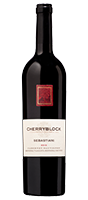
2017 Sebastiani Cherryblock, Cabernet Sauvignon, Sonoma Valley
93 Points – Robert Parker

Great complexity, intricacy and sophistication. Intense, concentrated aromas of blackberry, vanilla and baking spices. Rich black fruit washes over the palate with complex layers of cedar and tobacco. Soft tannins and lingering notes of herbs and spice.

Ingredients:

  • 2 boneless beef short ribs(aka chuck flat), cut in 1″ cubes
  • 8 oz bacon, chopped
  • 2 cups onion, diced
  • 1 cup carrot, diced
  • 1 cup celery, diced
  • 2 cloves garlic
  • 1 sprig thyme 
  • 1 ea bay leaf
  • 2 cups red wine 
  • 1/4 cup tomato paste 
  • 6 cups veal stock
  • 8 oz red potato, quartered 
  • 8 oz crimini mushroom, cut in half
  • 8 oz turnip, peeled and cut in half
  • 8 oz baby carrot, peeled and cut in half
  • 8 oz pearl onion peeled

The Four Graces Pinot Noir Returns to Wine Spectator Top 100

Today, Wine Spectator announced their annual Top 100 list, and for the fourth time in three years, it includes one of Foley Family Wines’ best. The 2017 The Four Graces Dundee Hills Reserve Pinot Noir earned a spot on the highly-coveted list, coming in at #29.

“A delicate and polished beauty, with expressive violet and raspberry aromas that open to gracefully layered cherry and spiced cinnamon accents that build richness toward reined tanning,” wrote Wine Spectator’s Tim Fish when awarding the wine 94 points earlier this year.

This is the second wine from The Four Graces to be named to the Wine Spectator Top 100 in less than three years. The 2015 The Four Graces Pinot Noir, Willamette Valley was named to the list in 2018, ranking 50th.

Tim Jones, head winemaker for The Four Graces talked about how important the role the terroir plays for The Four Graces. “In the Willamette Valley, the winemaker always takes a backseat to the vineyard and season. I see my role as discovering what a vineyard can provide, rather than trying to force a particular style.”

Foley Family Wines now boasts five wines to be named to the WS Top 100 in its history, four in the past three years. The others to make the list include the 2005 Merus Cabernet Sauvignon, which made an appearance in 2008 at No. 95, the 2014 Lancaster Estate Cabernet Sauvignon, which was ranked #86 on the 2017 list, and the 2014 Foley Johnson Meritage, which finished out the list at #100 back in 2018.

14 Gift Wines for The Holidays

Don’t get us started on the ordeal of buying gifts this year. We know! We’re still counting receipts from our Black Friday purchases. We know you are too. That’s why we’re making your December holiday gift-giving task 14 times easier with these 14 gift ideas that cover every possible wine lover in your life. Thank us later, and don’t forget to “Add to Cart” one of these for yourself!

HOLIDAY MAGNUMS

Banshee Rose

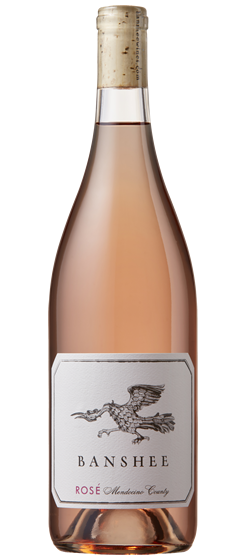
Banshee 2018 Mendocino County Rosé (Magnum)

Your friends and family, and you yourself, really only need one rosé to get you through the holiday season, so let this Banshee be the one. For starters, the cocktail hour is easily extended because this offer comes in MAGNUM—double the fun! It’s juicy grapefruit, creamy strawberry, and Macadamia nut finish will warrant a few refills anyway to really make it feel like you’re getting to know the Mendocino County wine scene through those rose-tinted glasses. And who doesn’t like receiving the gift of two bottles squeezed into one?

Sebastianiani Cherryblock Magnum

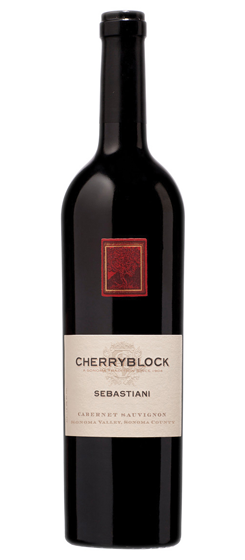
2016 Sebastiani Cherryblock Vineyard Cabernet Sauvignon (Magnum)

This is a fine wine in a regular 750ml bottle, but out of Magnum offers extra delight for both new wine drinkers and those with the most sophisticated palate. Sebastiani’s crowning Cabernet is made from their iconic Cherryblock Vineyard planted in 1961. This 2016 vintage landed a 94+ point score from Robert Parker’s Wine Advocate for this 2016 release. The Advocate found an “intensely scented” wine packed with “cassis, baked black plum, blueberry coulis and red cherry preserves with touches of allspice, incense, cedar, dried leaves and warm earth plus a streak of graphite.

2016 lancaster cabernet

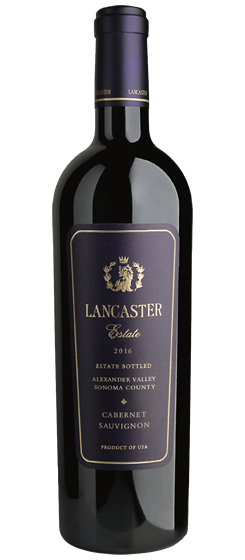
2016 Lancaster Estate Cabernet Sauvignon (Magnum)

In wildly limited supply, and from one of the absolute best vintages in the last two decades in Northern California for Cabernet, comes this black-fruited, licorice-scented, violet-filled Estate Cabernet with beautifully polished tannins. Add to all that savory tobacco and leather spices, and a long salted dark-chocolate finish. In short, opening this Magnum will make a lasting impression whether gifted or shared at your holiday gathering. Pair alongside a holiday rib roast or gruyere-topped burgers on a brioche bun for an impeccable night.

2016 fj cabernet magnum

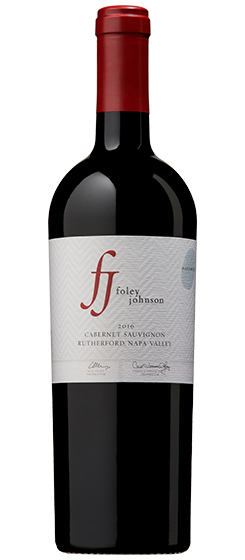
2016 Foley Johnson Peral Vineyard Cabernet Sauvignon (Magnum)

From a tiny 10-acre estate parcel in the Rutherford AVA, that perfectly showcases the famous “Rutherford Dust” characteristic. Give the gift of a Magnum so there are plenty of opportunities to swirl, sniff, sip, and explore. Once past the indulgent aromas of vanilla and pipe tobacco, black currants and crushed graphite, black cherry and blackberry that savory, mineral-rich, “dusty” tannin emerges— it’s the thing that gives this wine its firm, sturdy structure and sheer brilliance. It’s the dust that’s launched a thousand beautifully structured Cabernets and the kind to wear proudly on one’s boots—just don’t spill it on those boots.

HOLIDAY STAPLES

2016 Kuleto Estate Danielli Red Napa Valley

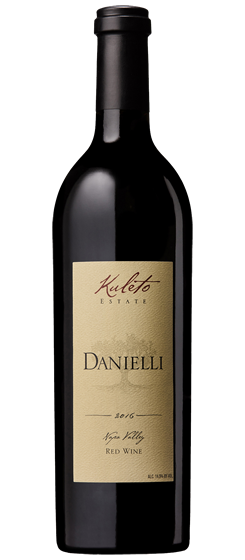
2016 Kuleto Danielli Red (750ml)

Just 294 cases were produced of this Cabernet Sauvignon, blended with Syrah, Cabernet Franc, Zinfandel, and Pinot Noir. Winemaker Giovani Verdejo “Gio” drops this prized fruit into 40% New French oak for 18 months before bottling. The result is a generous dose of hearty French oak spices, deliciously layered blackberry and plum fruit with sweet Bari date notes and the kind of hearty, elongated tannins that will leave the recipient of this wine with nothing to do but swirl its contents around and around just to marvel at the texture.

2019 Ferrari Carano Fume Blanc

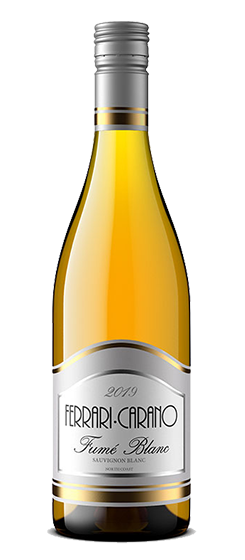
2019 Ferrari-Carano Fumé Blanc, North Coast (750ml)

If 2020 wasn’t labeled “Year of the Takeout,” it should be. And this is the perfect zippy white for that friend or family member who has been ordering out nightly. It’s brilliant alongside classic Japanese, Vietnamese, Thai, Chinese, Korean, Mexican or Southwestern cuisines. A bit of aging in older, neutral French oak barrels results in a richness that is balanced by crisp acidity from cool, stainless steel tank fermentation in this 100% Sauvignon Blanc, making it a dynamite pairing for those delicious take-out dishes.

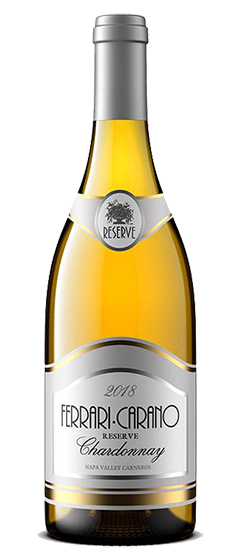
2018 Ferrari Carano Reserve Chardonnay

2018 Ferrari-Carano Reserve Chardonnay (750ml)

If you know a buttery Chardonnay-lover, Executive Winemaker Sarah Quider’s Reserve Chardonnay is right on the money. Imagine a rich Chardonnay with an Old World quality balanced by the sheer brilliance and vivid acid backbone of Carneros grapes, all in one bottle. That’s this wine, and it’s a must-buy that will pair perfectly with that one family member’s holiday table teeming with delicious buttered rolls and mountains of mashed potatoes. It’s a butter-palooza and this Reserve bottling will only up the ante.

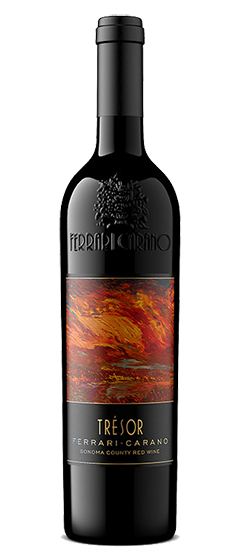
138215FC Ferrari Carano Tresor Alexander Valley 560

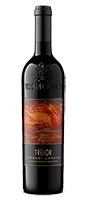
2015 Ferrari-Carano Trésor, Alexander Valley (750ml)

Make this treasure-filled bottle the centerpiece of someone’s holiday table. “Trésor” is French for “treasure” and in the low-yielding 2015 vintage, it landed a 93-point score from Wine Spectator, which called it “delightfully rich, charming and accessible, with ripe, firm tannins and a compelling core of rich dark berry, licorice, sage and cedar flavors,” concluding it is simply, “impressive throughout.” A blend of 62% Cabernet Sauvignon, 13% Petit Verdot, 11% Malbec, 10% Merlot, and 4% Cabernet Franc from prime vineyards in Sonoma’s Alexander and Dry Creek valleys.

667115FC 2015 PreVail Back Forty Alexander Valley 560

2015 PreVail Back Forty, Alexander Valley (750ml)

If you want to know why Alexander Valley is a perfect place for growing Cabernet, open this.” That’s the message you’ll include in your gift card for this 100% Cabernet Sauvignon, which hails from grapes grown on the back side of Ferrari-Carano’s RockRise Mountain in Alexander Valley. The 40-acre vineyard is perched at 1,100 foot elevation, where clone 337 was planted with the intention of harnessing cooler-climate energy into smaller berries with intensity and richly-textured tannins. This lovely wine received 93 points from Wine Advocate for its “warm red currants, black cherries and black plums…baking spices, char-grill and cigar box…full-bodied…with ripe, grainy tannins and a lively line lifting the fruit to a long finish.”

HOLIDAY GIFT COLLECTIONS

Spread the cheers with our specially curated holiday gift sets complete with an elegant gift box to add that special touch for your loved ones. Including some of our finest selections of wines for the Chardonnay enthusiast and entertainer to the collector, we have everyone on your gift list covered.

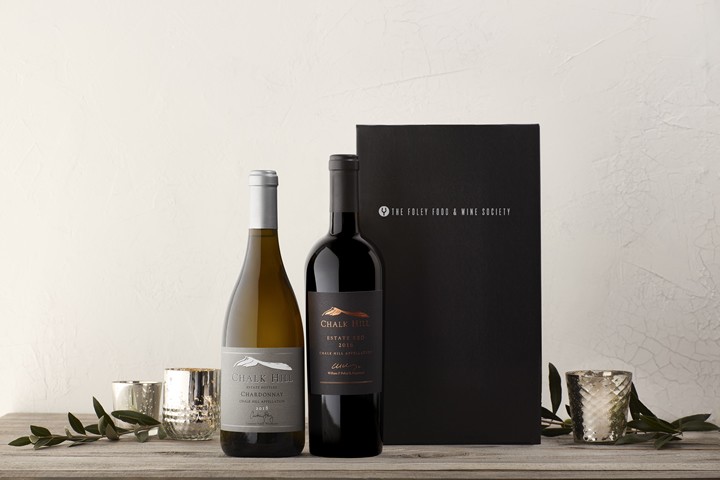
EC999501A Chalk Hill Wine Gift Duo

Chalk Hill Duo

The only thing better than a bottle of knockout 2018 Chalk Hill Chardonnay is the opportunity to follow it up with a bottle of our 2016 Chalk Hill Estate Red from an incredible growing season. With both wines earning 92-points from the Wine Advocate, we can’t think of a better two-pack for that Chalk Hill lover, or for the uninitiated. Seriously—if you know someone who has never been privy to a bottle of Chalk Hill, this will be the gift that is sure to impress.

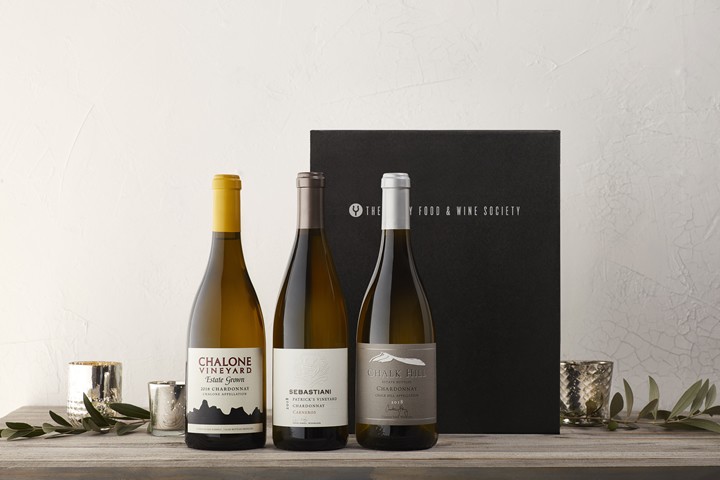
EC999502 Chardonnay Showstoppers Holiday Wine Trio

Chardonnay Showstoppers

Chardonnay enthusiasts—this is the gift you’ll want to buy to treat yourself this holiday season. Trust us. From the 2018 Chalone Reserve to our 2018 Chalk Hill Estate, polished off with a 2018 Sebastiani from Patrick’s Vineyard, this 3-pack offers an incredible snapshot of the diversity of our Burgundian-style Chardonnay wines in the Foley Family portfolio. Consider it your wine enthusiast’s duty to explore all three in one evening and to articulate the differences in ways that make you sound like the wine student you were always meant to be.

four grace white wine gift set

The Four Graces White Wine Holiday 3-Pack

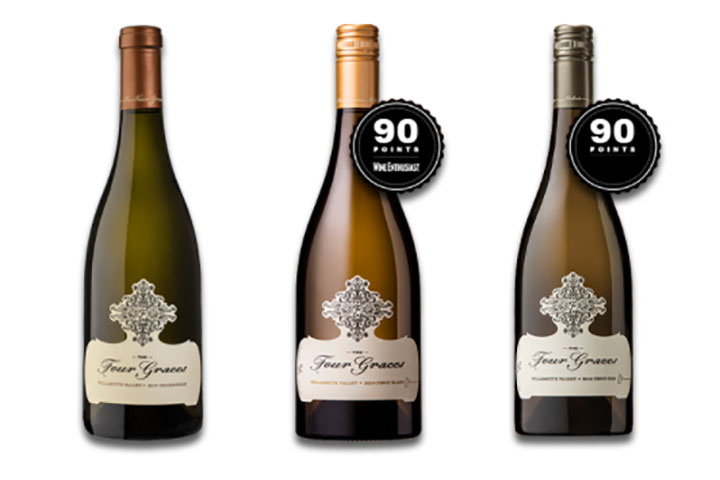
Do you want to ‘wow’ someone with your expert wine knowledge and keen, savvy ability to select three white wines that showcase extraordinarily different styles? We know you do. This 3-bottle pack presents three renditions of Willamette Valley white wine—a 2017 Chardonnay, a 2019 Pinot Blanc and 2019 Pinot Gris, and we assure you that “wow” will be the only response.

four grace red wine gift set

The Four Graces Red Wine Holiday 3-Pack

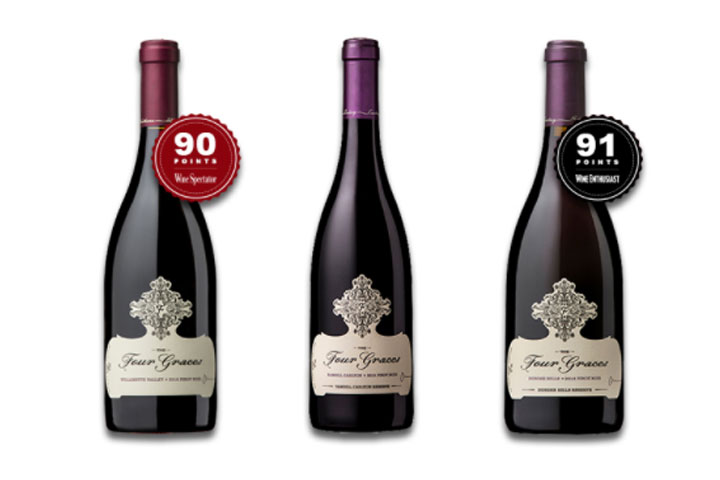
For the Pinot lover, this is the ultimate gift and potentially eye-opening lesson in terroir. Pinot Noir. more than any other variety, takes on the characteristics and quality of the place where it is grown. This 3-bottle set offers a peek into the style and character of The Four Graces Pinot Noir from the Willamette Valley AVA, the Dundee Hills AVA, and the Yamhill-Carlton AVA. All are from the 2018 vintage and have stellar rave reviews from Wine Enthusiast and Wine Spectator.

EC999501A Holiday Classics Holiday Wine Trio

Holiday Classics

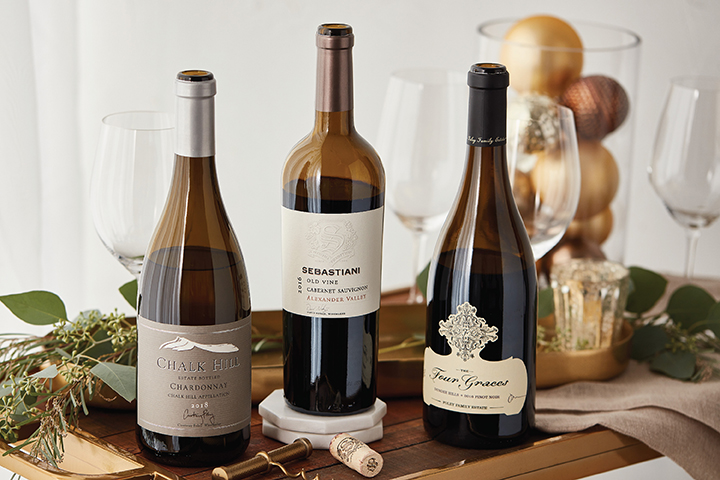
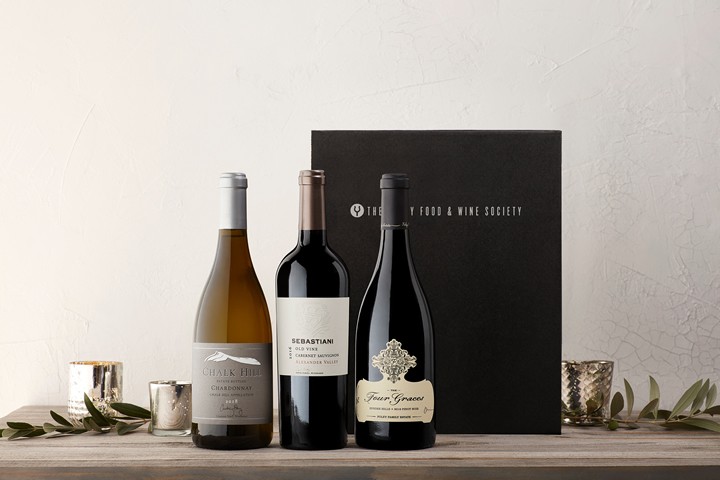
No gift guide would be complete without one perfectly curated selection for that classic wine lover in your life. This set includes the lush 2018 Chalk Hill Estate Chardonnay (92 points, Wine Advocate); the intense, mineral-driven 2016 Sebastiani Old Vine Cabernet Sauvignon (93 points, Wine Advocate); and the harmonious 2016 The Four Graces Pinot Noir (93 points, Wine Spectator). With something to please every palate, this gift set will satisfy any wine lover who revels in the pleasure of a great glass of wine.

Update on Southern California Tasting Room Closures

Friends of The Foley Food & Wine Society,

Happy Holidays to you and yours!

We hope this message finds you enjoying the season. For many, this holiday will be different from prior years. As we take priority on keeping our community safe, and in compliance with the State of California, our Chalone Vineyard, FFWS Tasting Rooms at Bacara, Firestone VineyardFoley Estates and Lincourt Vineyards will be closed for on-site tasting experiences. While it saddens us deeply to make this difficult decision, the health of our staff, our customers and our community are our priority, and we look forward to reopening as soon as possible. While we can’t host you at the winery during this time, we can help spread holiday cheer to you and your loved ones with a few options below.

Below are a few opportunities our team is ready to assist you with:

*Retail shopping experience – Place your wine order by calling (855)883-8688 or email us. 

* Order Online – Visit us online at www.foleyfoodandwinesociety.com to have an assortment of your favorite wines shipped directly to your home. Just log in and let the virtual shopping fun begin!

* Concierge Service – We are committed to personally helping you order wines for your table or to send to others as a gift. We have our concierge team on standby to assist you with any custom ordering for all of your holiday needs. Call (855)883-8688 or email us today!

* Stay Connected – See our latest updates on InstagramFacebook and Twitter. Don’t forget to tag us in all your special moments this Holiday Season when you open a Foley Family wine, so we can spread the cheer some more.

We are truly thankful for your continued support and hope to see you soon. Stay safe and happy holidays!

Cheers,
The FFWS Team

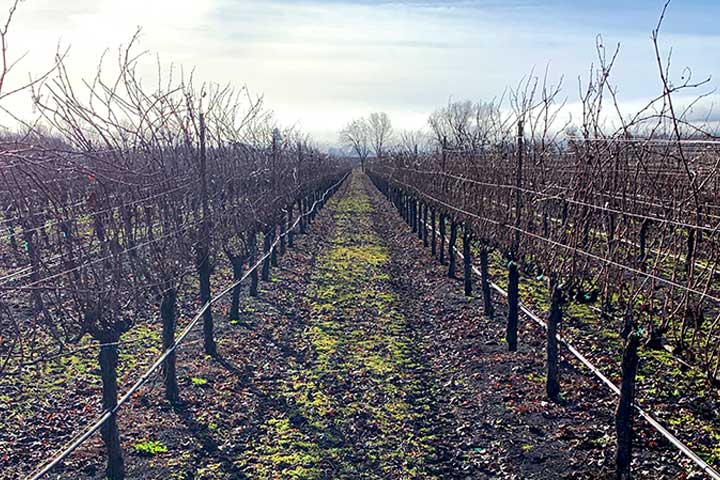
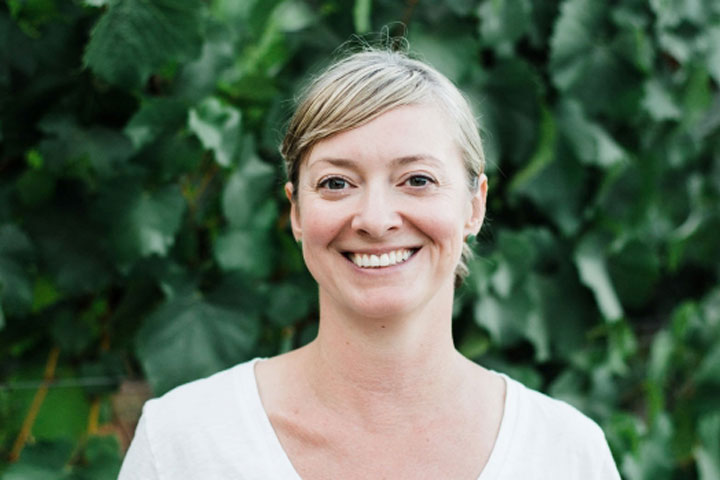
Life of the Vines: Lying Fallow, Looking Ahead

It’s hard to believe it, but we’ve been interrupting Foley Family Wines Director of Viticulture Kara Maraden for an entire growing season now. We’ve asked her to take a bit of time each month to tell us all about the farming vineyards in our series “Life of the Vines.” (In case you missed the previous iterations, you can find them here: NovemberOctober, September, AugustJulyJuneApril).

For the final month of 2020, we asked Kara to talk about everything from winter dormancy to growing grapes at home and wondered if she might dispel a few common misconceptions about growing grapes. We’re so grateful for all her hard work, which is something we can literally taste in every bottle of Foley wine. So, kick up your feet, and enjoy Kara’s last “Life of the Vines.” We hope all this farming talk makes you thirsty!

Kara Maraden

KARA MARADEN, DIRECTOR OF VITICULTURE

FFWS: Winter in the vineyards is a bit different than winter in places where it gets incredibly cold. But how cold does it typically get in CA, OR, and WA, where you farm?
Kara Maraden (KM):
 Winter on the west coast is as varied as it is throughout the country. Winter in California on the central coast and Northern California sees huge diurnal swings in the winter as well as the summer. We typically see high-20s at night to mid-60s during the day, giving us 30-40 degree swings in a 24 hour period. Oregon and Washington see less of a swing. Where we farm in the Willamette in Oregon we see swings of 20-30 degree swings and we can get snow—although that is rare. In Washington, we see very steady, cold days and snow is very normal. It does get very cold everywhere we farm, even Santa Barbara in the winter, it is just during the middle of the night when we are less aware of it. I have seen temps in the teens at all of our vineyards during the night.

FFWS: What is going on in the vine during winter dormancy?
KM: 
The weeks leading up to full vine dormancy are very interesting and the vines are showing us this transition. As the temperatures cool and the days get shorter, they act in the same way as many other deciduous plants, the leaves change colors. Different cultivars show this process in the different colors they express as they are shutting down. The leaves are no longer producing chlorophyll. The loss of chlorophyll and the movement of carbohydrates to the roots reveals other polyphenols that are present. Deep red/blue fruit cultivars that have high levels of anthocyanin such as Petite Syrah and Petit Verdot can turn very red. Many other red cultivars should just turn yellow or orange and white cultivars such as Chardonnay and Sauvignon blanc don’t have those red anthocyanins so they just turn yellow. Some spotty red vines in the fall among other yellow looking vines can indicate that the vine has a virus. But if the color is uniform, it is just the natural process of things. Healthy vines will lose their leaves once water has stopped moving in the shoots and a strong wind or the rain knocks them off.

FFWS: What kind of farming is required throughout the winter months?
KM:
 One of the most important cultural farming practices happens during the winter months. Once we feel that the vines have had enough cold nights and are in dormancy we will start to prune. Typically, you don’t want to prune until there is no sap (which is mostly just water) that seeps out of a cut you make to the old cane. Some pre-pruning may happen in early winter. This just means that people or machines go in and cut most of the canes from the canopy at a height of 12 inches or so above the head or the cordon and then those old canes are removed and untangled from the wires. This is just so we can make it easier to get the cuts we want when the crews go in and do the final job. This way they do not have to remove all the old canes from the wires and they can move more quickly and accurately.

FFWS: Sometimes, driving by a vineyard, you might see a massive pile of vines. Assuming it’s because a decision was made to replant, why does that typically happen in the winter? When a vineyard is cleared, how long before it is replanted typically? Can you use the phrase “lie fallow” and describe what that means?
KM: 
When a vineyard is going to be replanted the decision of when to remove it is usually an economic one. You won’t have a producing crop for at least three years. So the vines are given one more harvest and then they are torn out. It is also because the soil is currently dry and the equipment can get in to do the job. The soil will be easier to work with after the winter rains in the spring. If the field is fallow in the spring (meaning there is no crop growing in cropland), this gives us time to do all the things we need to do in the vineyard before replanting can happen. Working the ground as soon as it is dry enough, applying amendments, setting up irrigation lines and stakes, this all happens the next spring and summer. We are in the process of replanting hundreds of acres right now and we typically see a two-year process before new vines are in the ground. However, this very much depends on the operation. The turnaround can happen in just one year if everyone is hustling. The field will lie fallow for one season before it is planted.

FFWS: Looking ahead to warmer days already, when does a vineyard first begin to wake from winter dormancy? What makes for an ideal spring in terms of weather?
KM:
 Winter dormancy ends when enough accumulated chilling hours have been achieved—about 150 for vines. A chilling hour is the time the vine spends with the temperature between 45 degrees F and 32 degrees F. Once enough hours have accumulated the weather may still be too cold for bud break so the vine remains dormant until the temperatures get warmer. An ideal winter and spring are cold temperatures and plenty of rain. We ideally want the ground to have moisture when the vines wake up so they can start to pull resources from the soil. If it is too dry it is very difficult to get the nutrients the vines need to really reach their healthy max growth that season. This is especially the case with Nitrogen uptake.

FFWS: As someone who works outdoors for a living, in a vineyard for most of your day, what advice would you give to would-be growers or amateur growers about planting a few simple vines in a home garden? Can it be done? What is best to plant in the Pacific Northwest or wetter regions like Florida, or cold places like New England?
KM:
 Vines are very easy to grow actually. They just need nutrients water and space. It takes about 85-90lbs of grapes to make about 5 gallons of wine and the cultivars all have different outputs but a typical Vitus vinifera vine can produce 10-30 lbs of fruit, varying quite a bit depending on the grape. I would say go for it but make sure you keep them under control because they are vines! Making wine is a different story. Table grape varieties are a real joy to grow and eat fresh off the vine. I wouldn’t recommend growing wine grapes in humid hot areas. There are wild species of grapes that grow all over the world but in these climates, the disease pressure is very high and your chances of getting viable and quality fruit is low. But I’m sure someone out there is making a go of it. Varieties like Riesling do very well in colder climates as well as so many American hybrid cultivars such as Chambourcin, Vidal Blanc, and Marquette. These cultivars have been grown for decades in the Northwest. Fact is, grapes are grown in every state at this point. Pretty impressive.

FFWS: What is one of the greatest myths people have about grape-growing? Something you hear over and over, that you’d like to dispel.
KM:
 There are a few myths that I can dispel. One is that grape-vine farming uses tons of pesticides and water. As a community of farmers, we are keenly aware of our environment and have worked very hard to be as sustainable and regenerative as we can be. Grapes actually use very little compared to some other crops and we are all in it for the long haul so taking care of our environment is very important.

The other is that grape-growing is so “Romantic.” It can be in the big picture but farming grapes is very hard work, it’s long hot days and long cold nights with so many uncertainties. But it is extremely rewarding when you see those grapes go into a beautiful bottle of wine. Especially when you pop the cork.

Spotlight on Whitefish Mountain Ski Resort

One of the less obvious benefits that comes with being a member of the Foley Food & Wine Society is that members get to take advantage of other Foley Family-owned properties, with special deals and discounts tailored just to them.

We know that FFWS members are wine lovers, first and foremost. We also know that many of you are big Vegas Golden Knights fans and that you revel in the thrill of the team taking the ice for the first time at each game. But what about those of you who live for the thrill of cruising down ice-slick, perfectly-packed ski slopes in winter time?

For those of you who love to hit the ski slopes, we’re turning a spotlight on Bill Foley’s Whitefish Mountain Resort situated in Whitefish, MT. We spoke with Nick Polumbus, Director of Marketing and Sales at Whitefish, about all the reasons to consider booking a stay at the resort. Of course, we encourage you to consider any travel restrictions or rules governing travel in your home state, but we’re also looking ahead to a time when we begin moving being the travel predicaments that have resulted from the COVID-19 pandemic.

So, picture yourself suited up, at the top of the mountain, ready to take your first plunge down the mountain. Nick has the scoop on how best to travel to the resort, as well as some tips about dining and, of course, what benefits await FFWS members.

First off, for the FFWS members who don’t know about Whitefish Mountain Resoort, give us the overview: How many rooms, how many ski slopes? What are the amenities?
Nick Polumbus (NP): 
Whitefish Mountain Resort Lodging offers access to 150 different properties ranging from a budget hotel to deluxe condominiums to large ski-in ski-out single-family homes—something for all tastes and budgets. The mountain itself spreads out over 3,000 acres with 113 marked trails and terrain variety that truly provides a world-class ski experience for families and hardcore skiers alike.

You’re off-the-beaten-path, so what’s your best travel recommendations for getting to Whitefish on schedule for a reservation? Anything we need to know about current travel interruptions?
NP: 
For most folks flying in is the best way to go. Most of our flight markets are still being serviced despite the travel interruptions across the country. The easiest connections come from Salt Lake City or Minneapolis on Delta, Denver on United, or Seattle with Alaska Air. You fly into Glacier Park International Airport (code FCA). Our airport is big enough to service the major carriers and small enough that you can be walking out the door with your bags within 20 minutes of landing. The best part is the airport is less than 45 minutes from the resort door to door.

ffws whitefish feature


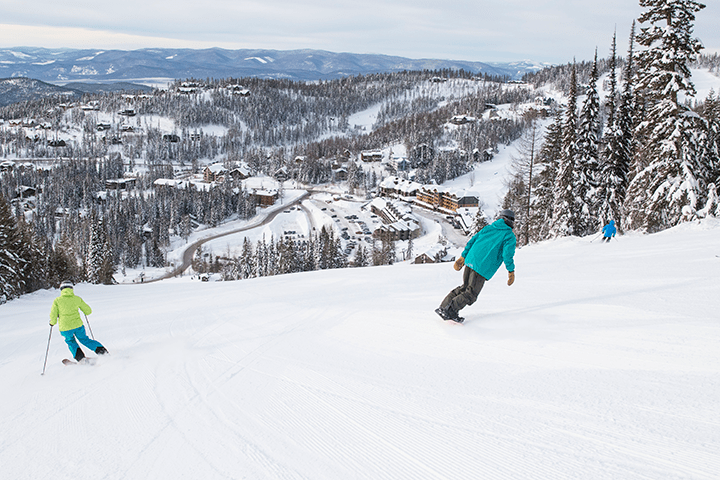
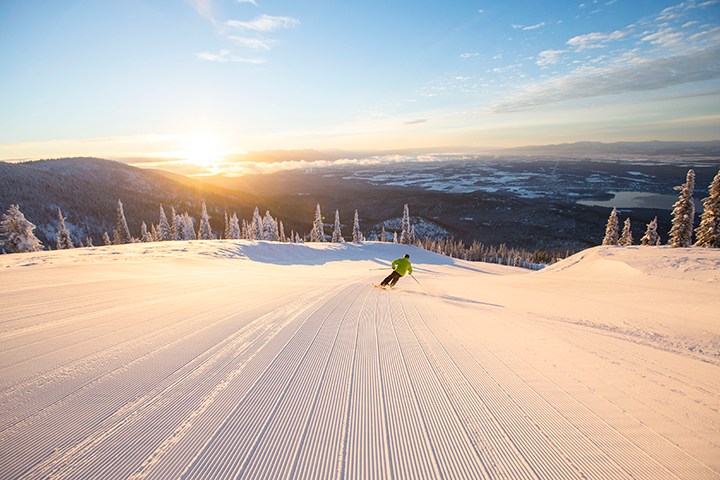
Header Image: Descending the freshly groomed Toni Matt en route back to the Village. This image is of a skier in a yellow jacket taking sunrise turns on the aptly named Inspiration trail. Both photos courtesy of: glacierworld.com

You were rated Ski Magazine’s #3 Resort again! What is about the slopes at Whitefish Mountain that makes you the #3 best skiing opportunity in the west?
NP:
 As I mentioned above we have such a pleasing variety of terrain that our loyal skiers are made up of everyone from families to seasoned ski vacation veterans. That said, the truth of the matter is that it’s a combination of value pricing, friendly service, and a genuine western town full of happy locals that sets us apart from other ski areas. That combination keeps people happy and coming back year after year. Our skiers are very loyal and it doesn’t hurt that we reinvest and improve the resort every season as well.

Once we’re off the slopes, where do you recommend grabbing a bite?
NP: There just so happens to be a James Beard award-winning chef-owned restaurant on the mountain called Café Kandahar. But there are also more family-friendly, character-filled options too. A short trip to town on the free SNOW Bus opens up the options to a remarkable selection of really good restaurants ranging from Sushi to New Orleans style fare. When folks come here for the first time they tend to leave shocked that a little old western town in the Northwest corner of Montana has the restaurant variety and quality that we have.

Back at the resort, talk about your hospitality service and how it compares to other top tier services?
NP:
 I did mention that we pride ourselves on friendly service. We take the extra step, slow things down a bit, look our guests in the eye, and make a real connection with people. That’s our strength. We don’t have a real white tablecloth high-end service approach to things—we’re way more focused on genuine connections and understanding what our guests want and then making it happen for them.

Finally, for FFWS members — any special offerings or discounts?
NP:
 We have a standing deal for FFWS members to receive at least 15% off lodging and lift tickets.

9 Standout Reds and Whites for Your Holiday Table

Between the rather incredible news headlines and all the politics of the past year, if there’s one thing we can all agree on, it’s that whatever is in your glass during any of the upcoming holiday meals—it has to be good. Really good. Utterly delicious. Lip-smacking, memorable, and maybe even the only thing you talk about. You deserve to wax poetic on the wine selections this year.

To aid you in that effort, we’ve put together 9 of our top picks so that you can simply reap the rewards. Go on, take all the credit for painstakingly scouring the internet for the absolute best wines to serve throughout the season, regardless of how big, or small, your party is. “No starter bottles tonight,” you’ll announce, “we’re diving right into the best stuff.”

Beginning with…

107118FC 2018 Ferrari Carano Chardonnay Sonoma County 560

2018 Ferrari-Carano Chardonnay Sonoma County
This golden-hued Sonoma Chardonnay took home Double Gold medals at the 2020 Sonoma County Harvest Fair along with 91 points and another Gold medal at the 2020 Sunset International Wine Competition. For all that gold, you might expect a hefty price, but it’s only worth its weight in gold. At just $23 per bottle, this is the kind of Chardonnay we like to stock up by the case, especially when the experience in the glass reveals aromatic pops of white flowers, orange blossoms, and lemon peel along with sumptuous graham cracker crust and vanilla-tinged fresh buttercream. Lively and energetic on the palate with a crushed-stone minerality leads to more baking spices notes. This is our top value holiday-meal companion bottle from crudité to turkey and that cheese course in place of dessert. Note: shipping only available for California and Florida residents.

2015 Ferrari Carano Tresor Alexander Valley1

2015 Ferrari-Carano Trésor Alexander Valley
This “delightfully rich, charming and accessible” Bordeaux blend earned 93 points from Wine Spectator, which further gushed over the wine’s “firm tannins and a compelling core of rich dark berry, licorice, sage and cedar flavors,” concluding it is “impressive throughout.” A blend of the classic Bordeaux varieties, Cabernet Sauvignon, Malbec, Petit Verdot, Merlot, and Cabernet Franc from our top sites in Alexander, Napa, Knights, and Dry Creek Valleys. Talk about a real treasure—the name “Trésor” is French for “treasure,” and one simply not to be missed. Pair it with lamb or beef, or pepper-crusted filet in a Bordelaise sauce—you can’t go wrong. Note: shipping only available for California and Florida residents.

2018 El Pino Club Sea Floored Pinot Noir Sta Rita Hills

2018 El Pino Club Sea Floored Pinot Noir Sta. Rita Hills
Pinot Noir lovers are genuinely in a club of their own. We understand the Pinot-obsession, and it’s why we created the El Pino Club. Each winemaker in this “club” curates exceptional Pinot Noir from around the globe so that you can see the world through the eyes of this beautiful little grape. This “Sea Floored” hails from two estate vineyards in the Sta. Rita Hills—Rancho Santa Rosa vineyard with Pinot vines rooted in steep, south-facing slopes in limestone soils and Rancho Las Hermanas in the far western reaches of the AVA, with six different soils of ancient marine sediments.

The critics were floored, and you will be too. 93 Points and a “Cellar Selection” from Wine Enthusiast, along with 94 Points and a “Publishers’ Pick” from The Tasting Panel Magazine, which found, “Bright aromas of red rose petals, damp leaves, and cranberry cola. Underbrush notes on the palate include dried blue flowers. Streamlined acidity and a silky mouthfeel, with earth, slate, pomegranate, red tea, and cinnamon.”

2015 Lancaster Estate Cabernet Sauvignon

2015 Lancaster Estate Cabernet Sauvignon
Native yeast fermentation, aged for 26 months in 100% new top-of-the-line French oak, and bottled unfiltered? That’s the level of quality you’d expect from your Aston Marton dealer, which is why this is essentially the Aston Maron of wines. Leading with 76% Cabernet Sauvignon, and splashes of Malbec, Merlot, Cabernet Franc, and Petit Verdot, it’s no wonder the wine pundits raved over this wine, like Robert Parker’s Wine Advocate, which found “notes of warm blackcurrants, black cherry compote and blueberry preserves with touches of cedar, mocha, new leather and sandalwood plus a waft of bay leaves. Full-bodied and giving a taut frame of chewy tannins, it has loads of muscular fruit and a long cedar-laced finish,” capped off with a 93+ point score.

The “+” means the score has the potential to go up, as the wine gathers age and complexity in the bottle. From a stellar low-yielding vintage, it’s just beginning to hit its stride. This could be the Alexander Valley showpiece bottle at your holiday table.

2016 Sebastiani Cherryblock Cabernet Sauvignon Sonoma Valley

2016 Sebastiani Cherryblock Cabernet Sauvignon, Sonoma Valley
Sebastiani’s crowning achievement is none other than its Cherryblock Cabernet Sauvignon. But there’s an air of mystery surrounding the vines that produce Sebastiani’s legendary Cherryblock Cabernet Sauvignon. Samuele Sebastiani first purchased the site on which the vines are planted in 1919—the year Prohibition was ratified. But instead of planting grapes, he planted a cherry orchard. The first grapevines arrived in 1961 and 1962, planted by August Sebastiani, on traditional St. George rootstock—but no one knows the true origins of where the budwood originated, and August left no detail or receipt from any nursery. Whatever their origins, they are superior quality vines!

In the exceptional 2016 vintage, Parker’s Wine Advocate found a 94+ point “intensely scented” Cabernet redolent of “cassis, baked black plum, blueberry coulis and red cherry preserves with touches of allspice, incense, cedar, dried leaves and warm earth plus a streak of graphite.” Pairs well with cold winter nights by the fire and the desire to drink only the most delicious wine all night long during Thanksgiving or, really, any holiday meal.

2018 The Four Graces Pinot Noir Willamette Valley

2018 The Four Graces Pinot Noir Willamette Valley
This is no ordinary Willamette Valley Pinot Noir. Nevermind the 90-points from Wine Spectator, which found a “Svelte and vibrant,” red “with narrowly focused raspberry and pomegranate flavors, laced with black tea notes and a hint of sandalwood.” The real reason you’d want to secure some of this Pinot Noir is that at $32/btl, the pedigree of what’s inside the bottle is unmatched. We combined Foley Family Estate Pinot Noir grapes from the Red Hills of Dundee with prized grapes from the 90-acre Doe Ridge estate, an experimental “L.I.V.E” site (meaning it is farmed to low impact viticulture and enology standards). Add to the mix, select lots from Erratic Oaks, Hyland, and Prince Hill vineyards, and after aging nine months in 15% new French oak, this is top-shelf Pinot at a bargain price.

2018 Chalk Hill Estate Chardonnay

2016 Chalk Hill Estate Chardonnay Chalk Hill AVA
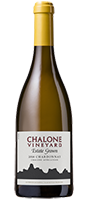
No holiday evening is complete without pours of Chalk Hill’s Estate Chardonnay. And the only thing better than a bottle of Chalk Hill Estate Chardonnay is a MAGNUM of it! Sure, it was featured in Food & Wine magazine’s “25 Amazing Wines to Drink Right Now” story in late 2019, and it nabbed 91 points from Parker for its “ripe Bosc pears, fresh apple slices,” and “lightly browned toast and struck flint,” with a “satiny texture and lively line, finishing creamy,” but we still have a few bottles left. Literally, just a few. So, run, don’t walk to the “Buy Now” button on this one and you’ll deserve all the bragging rights you have coming to you during this year’s holiday celebrations—no matter how intimate the party.

Chalone Vineyards Chardonnay

2018 Chalone Vineyard Estate Chardonnay, Chalone AVA
Taking the #3 spot in the famous 1976 Judgment of Paris tasting, Chalone Chardonnay bested California’s Spring Mountain, Freemark Abbey, Veedercrest, and David Bruce, as well as France’s Beaune Clos des Mouches, a Ramonet-Prudhon Bâtard-Montrachet, and a Domaine Leflaive Les Pucelles Puligny-Montrachet. Three of the nine judges had actually rated Chalone first! And frankly, you can’t go wrong with any vintage of Chalone Chardonnay. The 2018 marries nuanced oak, with crisp citrus and an undercurrent of minerality courtesy of Chalone’s ultra-rare, unique limestone-rich soils on the Gavilan benchland in Monterey County. Serve it alongside cream of broccoli soup, grilled chicken with lemon marinade, baked halibut, or go for the gold and prepare an umami-rich miso Black Cod.

Lincourt pinot noir

2016 Lincourt Lindsay’s Vineyard Pinot Noir, Sta. Rita Hills
Named for Bill Foley’s daughter, Lindsay, the pristine grapes for this 2016 Lindsay’s Vineyard Pinot hail from the estate Rancho Santa Rosa vineyard in the Sta. Rita Hills AVA. Hand-harvested, carefully destemmed, and cold-soaked for four days before fermentation in stainless steel, and gentle punch-downs for several days before aging in neutral French oak for 18 months. The result is a bright, vivid, fresh expression of Pinot with equally bright and flashy red berry fruit redolent of raspberries, overripe wild strawberry, and Bing cherry. Lush and juicy, this is one to enjoy on its own, or alongside your best brined-turkey, duck confit, lamb sausages, or burgers topped with sauteed shiitake mushrooms and melty Gruyère.

Life of the Vines: Into Winter Months

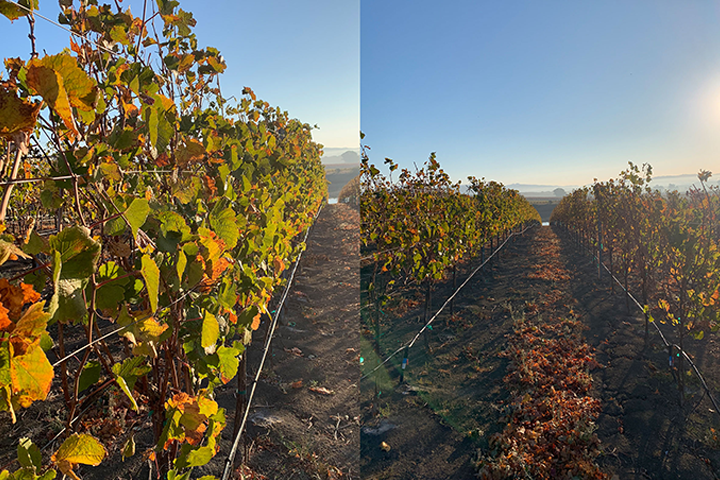
The leaves are turning color in vineyards all over California. The photos pictured above are of Pinot Noir vines in Ramal East Vineyard in Carneros, which Bill Foley purchased in 2012. These grapes make their way to Chalk Hill!

The skies have been a stunning azure blue in the absence of smoke from fires, and we’re thankful for that. Foley Family Wines Director of Viticulture Kara Maraden is also thankful for the couple of days she had off once harvest was officially over for the season. But there’s still a lot of activity in the vineyards, even after the grapes have been plucked off and trucked to the various wineries.

Vines must store up nutrients and settle in for the winter months, so that come spring, they are able to awaken and push out new buds with all that stored energy. In the Q&A below, Maraden explains why vine leafs change color, how the vines store energy, and what needs to happen for the vines to have a healthy, long slumber over cooler winter months.

FFWS: Last we checked, you were still harvesting grapes from Lodi! Are you now officially done with the harvest? What was your last day?
Kara Maraden (KM):
 November 3 was our last day picking Cabernet Franc and Cabernet Sauvignon fruit from Firestone and November 4 was the last day picking Cabernet Sauvignon from Lodi.

FFWS: Let’s talk about leaves. Some leaves on the vines turn crazy bright colors like yellow and red. Some keep their leaves for longer than expected. When do leaves typically fall off, and what do the colors indicate, if anything?
KM:
 Grape vine leaves do turn colors in the fall like many other deciduous plants. Typically most varieties will turn yellow and orange and fade in color. Many times the bright red that is expressed can be virus infection but some varieties are expressing a nutrient deficiency as bright red color. There isn’t anything to worry about in this case because we expect that the vine is deficient in most everything at this point. It will be just fine next spring. What the vines really need to trigger leaf fall and put them into dormancy are several nights of really cold weather. Then they need about 150 chilling hours during the winter to give them that reset that they need. This isn’t too difficult to get in the regions that we grow. Again, the health of the vine can determine the timing of many of these stages. Some viruses can cause leaves to stay on the vine all winter long.

FFWS: Do the vines experience any kind of stress once their grapes are harvested? If so, how do you mitigate that?
KM:
 Actually, we decrease the stress we put the vines under during the growing season with a big drink of water and fertilizer.

FFWS: Vines have to store up energy for the next season’s crop. How do they do that?
KM:
 In between harvest and when the vines start to actually shut down they will be transferring any carbohydrates from the leaves and active plant parts into the roots. This is why it is important to get the water and fertilizer on while there are still leaves in the vines. These stores will stay in the roots and in the spring when the weather and soil warm up, these stored carbohydrates/sugars are what the plant uses to initiate and sustain bud break.

FFWS: Vines go dormant, right? When do they typically “go to sleep,” and when do they typically “waken?”
KM:
 They do go dormant. Dormancy is triggered by shortening days and cooling temperatures. It is usually official after the plants drop most of their leaves and the water stops flowing through the plant. There isn’t a set temperature or climactic condition that works for all varieties but late-November in California is typically when the onset of dormancy begins. Once the temperatures and the soils warm in the spring (and there is hopefully some rain) the vines wake up and the dormancy is broken. This usually occurs in mid to late-March.

FFWS: What is the coldest temperature a vine can survive before damage begins to occur?
KM:
 Many vines can withstand below freezing temperature for a certain period of time given that they are fully dormant. If there is an early freeze the water in a vine will freeze and cause it to crack which will open the door for other diseases to come in. We see most winter kill in young vines that have not gone dormant with sustained nighttime temps of below freezing. In other regions such as Oregon they cut the vine back to the ground and pile soil on it in order to protect it. There is also snow up there, so that adds a whole other level of stress. The good news is that grapevines are very hardy and it is difficult to kill them!

FFWS: What do you like most about farming in the winter months?
KM:
 Farming in the winter months takes on a slow and regenerative feel. You get to analyze the previous year and plan for the next. It is a hopeful time when the vines and their humans get a little rest and recharge. It also doesn’t last long as pruning will begin before we know it.